
REVIEW · DINING EXPERIENCES
Tokyo Bay Yakatabune Dinner/Day Cruise with Japan Show and Drinks
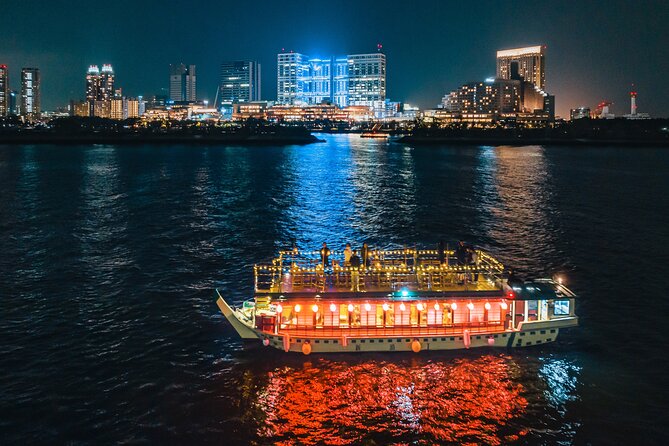
Tokyo Bay looks different from the water. On this traditional yakatabune dinner cruise, you float past Rainbow Bridge, Odaiba, Fuji TV, and Tokyo Tower while eating sukiyaki and listening to live Japanese music. It is part meal, part scenic boat ride, and part cultural show.
I like the open-air viewing deck, which gives you a clear shot for night photos, and the warm, personal service from hosts such as Karen, Sheila, Yoyo, and Midori. I also like that the experience brings food, music, and sightseeing together without asking you to cross half of Tokyo in one evening.
The main trade-off is that this is a scenic dinner cruise rather than a fully guided sightseeing tour. The boat moves at an easy pace, and some of the time is spent enjoying dinner and music rather than hearing a detailed explanation of every landmark.
Key points to know before boarding
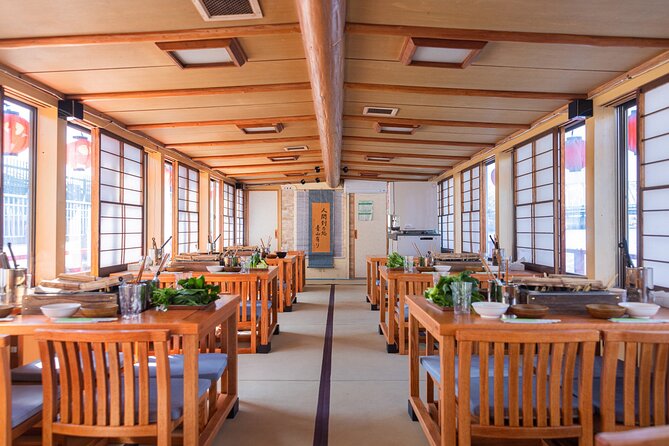
- Traditional boat setting: You may sit at a shared table in either low tatami-style seating or Western-style chairs.
- Sukiyaki dinner: The beef hot pot is included only when the meal option is selected, so check your booking carefully.
- Live Japanese music: Shamisen and other traditional performances form the heart of the entertainment.
- Tokyo Bay photo stops: Rainbow Bridge and the Odaiba waterfront are especially appealing from the open deck.
- Unlimited soft drinks: Alcohol may be available for an added charge, while some options include beer and sake.
- Bring warm layers: The upper deck can feel cold, especially on winter evenings.
A Tokyo evening that works best from the water
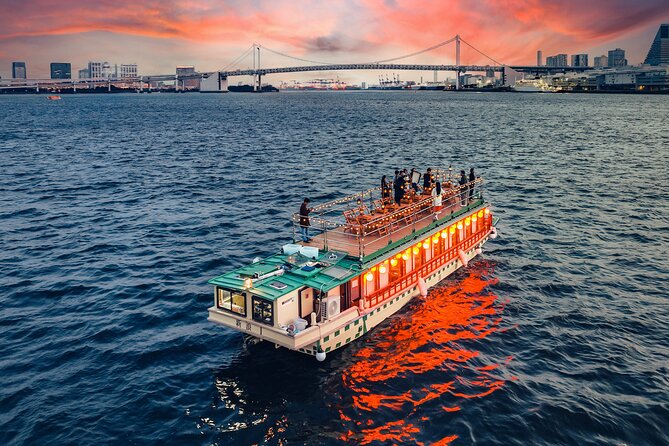
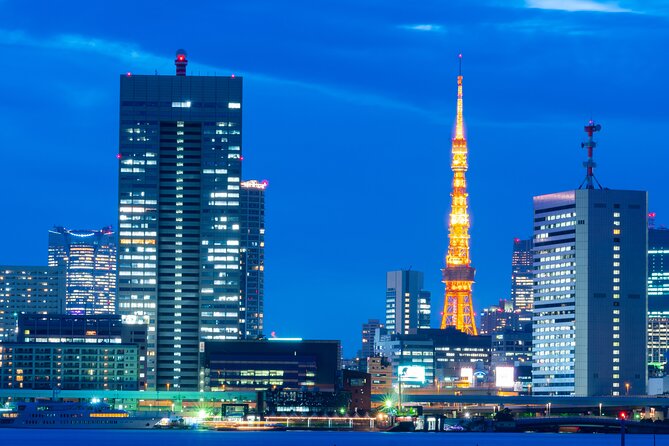
Tokyo is so dense that its landmarks can feel scattered when you see them from street level. From the bay, the city opens up. You get the illuminated Rainbow Bridge, Odaiba’s waterfront, the distinctive Fuji TV building, and distant views toward Tokyo Tower in one slow-moving scene.
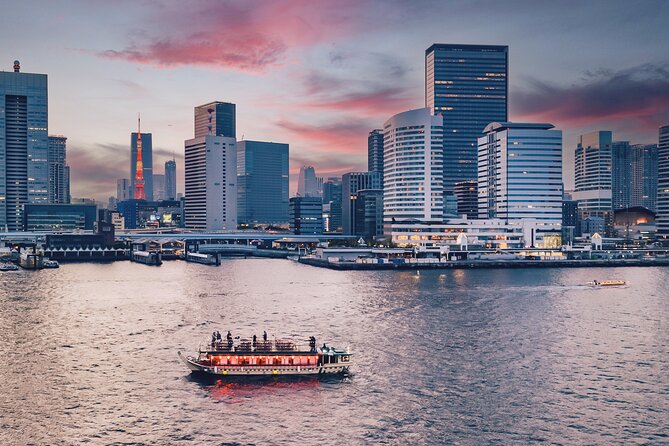
The boat itself adds much of the appeal. A yakatabune is a traditional Japanese pleasure boat, once linked with seasonal outings and evening meals. Here, you get a more relaxed version of that custom, with a hot meal, drinks, music, and a chance to step outside for photos.
The cruise lasts about 1 hour and 40 minutes, although some descriptions and experiences put the full outing closer to two hours. Either way, it is long enough for dinner and entertainment without taking an entire night from your Tokyo plans.
I would think of it as a cultural evening with scenery, not as a sightseeing boat where a guide talks constantly. That distinction matters. If you want an organized night with several ingredients in one package, this is a good fit. If you want detailed commentary at every landmark, you may find the guiding light.
More Dinner Cruises in the world:
- Big Island Historical Dinner Cruise to Kealakekua Bay
★ 4.5 · 1,279 reviews - Doha: Cultural Dhow Harbor Cruise with Optional Tea & Dinner
★ 4.9 · 1,152 reviews - Toronto: Premium Harbor Cruise with Lunch, Brunch, or Dinner
★ 4.5 · 1,091 reviews
Boarding at Etchujima
The meeting point is at 1-chome-3-23 Etchujima in Koto City, Tokyo. Transportation to the pier is not provided, so you need to plan the journey yourself and allow extra time for finding the correct address.
Arrive 15 to 20 minutes early. This is especially sensible because the boat departs on time, and the seating arrangement is handled by the operator. One host has even called passengers to confirm that they had the right address and were on their way, but you should not rely on last-minute help.
The group can hold up to 58 people. That is large enough for a social atmosphere, but not so large that the boat feels like a major river vessel. You may share a table with other people, which is part of the traditional group-dining setup.
You also need to remove your shoes. Wear socks you are comfortable showing, and choose footwear that is easy to take off and put back on when you head to the viewing deck.
Tatami seating, Western chairs, and shared tables
Cabin seating is assigned randomly. You may receive Japanese tatami-style seating or a Western-style chair arrangement. Low seating can be charming, but it is not ideal for every knee, hip, or back.
One useful detail is that low chairs may be placed on the tatami rather than having you sit directly on the floor. Still, you should expect a traditional room arrangement rather than a standard restaurant dining room.
Shared tables are possible because seating is limited. That can make the evening more social, though it also means this is not the best choice if you need a private table for a special occasion. It can still work well for families, couples, and friends who are comfortable sharing space.
The boat has a maximum capacity of 58 people, so the mood may change depending on the departure. Some evenings feel calm and intimate, while others may feel more like a friendly dinner party.
Sukiyaki dinner and unlimited soft drinks
The meal centers on sukiyaki, a Japanese hot pot built around beef. The food is cooked and served on board, giving the dinner a warm, hands-on quality that fits the boat setting.
Portions are described as generous, with rice and miso soup available and extra servings of those staples offered when wanted. The meal is a good match for a cruise because it gives you something to do while the scenery slips by, rather than leaving you waiting for a single plated course.
Check the exact option you book. The sukiyaki meal is included if that option is selected, but the basic cruise details do not make every meal package identical. Unlimited soft drinks are included on board.
Alcohol is not part of every package. Beer and sake may be available for an extra charge, while some booking choices include unlimited beer and sake. This can change the value considerably, so compare the food and drink options before paying.
At $65 per person, the price is reasonable if you value the full combination of meal, entertainment, boat ride, and city views. It is less compelling if you are paying mainly for a short sightseeing cruise. The food and show are what make the price work.
More Dining Experiences in the world:
- Buffet on Paradise Delight Dining Cruise Halong Bay Tour
★ 5.0 · 1,034 reviews - Auckland Harbour Sailboat Cruise Including Three Course Dinner
★ 4.5 · 476 reviews - Sydney: 3-Course All Inclusive Dinner Harbour Cruise
★ 4.7 · 383 reviews - Halong Bay Luxury Dinner Cruise – Ambassador
★ 5.0 · 374 reviews
Shamisen music and a friendly host
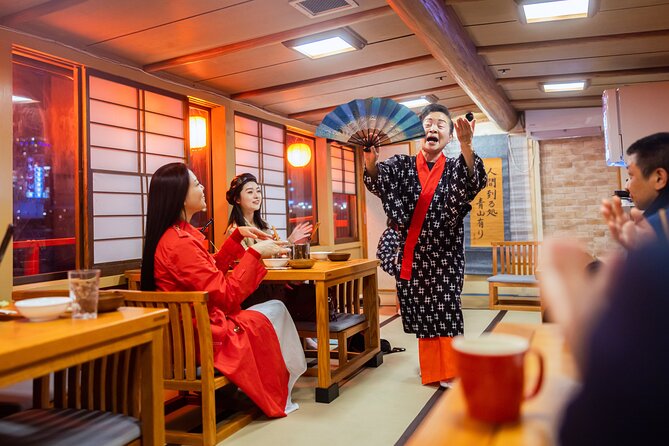
Live Japanese music is one of the strongest reasons to book this experience. Performers play traditional instruments, including shamisen, and some performances include singing and interaction with the room.
The music gives the cruise a cultural center. Without it, the outing might feel like a slow boat ride with dinner. With it, the evening has a sense of occasion.
The performers vary by departure. Names connected with the experience include Hibiki, Hinako, Yuzu, Yuki, and Midori. Some musicians sing as well as play, and the performance may continue through much of the meal.
The hosts also contribute a lot. Karen is noted for helping with photographs, while Sheila and Yoyo have helped explain the evening and point out buildings and statues around the bay. Midori has been praised both for music and for adding a lively cultural touch.
You should expect friendly assistance rather than a formal lecture. That suits the experience. A host may show you where to look for a landmark, help with a picture, or explain what is happening next, but the boat is not designed as a complete Tokyo history lesson.
Rainbow Bridge from the open-air deck
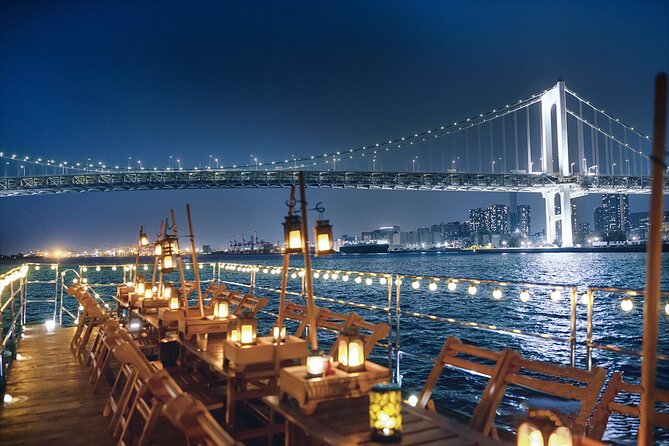
Rainbow Bridge is one of the best visual moments. Completed in 1993, the bridge stretches 3,750 meters and is supported by white towers that rise 126 meters. At night, its lighting can appear pink and white, depending on the evening setup.
The open-air deck is the place to go for photographs. From inside, windows and reflections can get in the way. Outside, you have a much clearer view and a better sense of the boat moving beneath the bridge and across the bay.
Bring a jacket even in seasons that feel mild on land. The wind on the water can make the deck cold, and winter departures are especially brisk. You may need to put your shoes back on for this part, so easy footwear is useful.
The boat ride itself is described as steady and gentle. If you want a fast-paced cruise with constant changes of scenery, the slow speed may feel uneventful. I see it as the point: you have time to eat, listen, and take photos without rushing.
Odaiba’s Statue of Liberty and waterfront
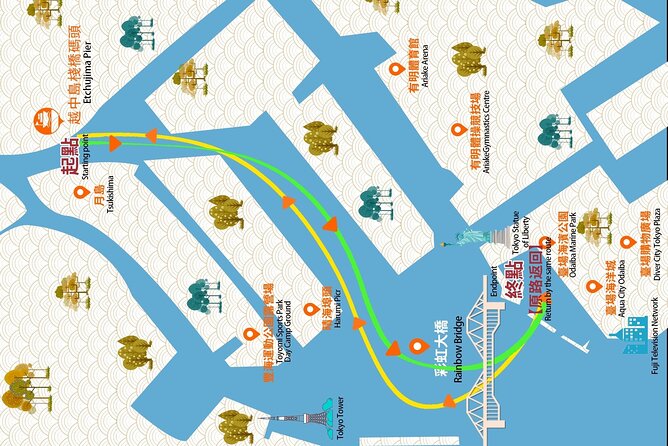
The itinerary includes about 30 minutes for sightseeing around the Tokyo Statue of Liberty in Odaiba. This is a replica of the statue in New York, placed beside Tokyo Bay with views toward the Rainbow Bridge and waterfront.
The stop offers a different type of photo from the bridge. You get the statue, open water, and Tokyo’s modern waterfront in the same area. It is a playful piece of Tokyo, and its connection to the original statue makes it an easy landmark to recognize.
Admission is not included, although the main boat experience is what brings you to the area. The practical details of the stop can depend on the departure and conditions, so do not assume that every moment will be a formal shore excursion.
For many people, the value is simply the chance to see Odaiba from the water and step outside for a clear picture. If you have already spent a full day exploring Odaiba, this portion may feel familiar, but the evening setting changes the view.
Fuji TV and Tokyo Tower
Fuji TV sits on the Tokyo Bay waterfront and is known for its unusual architecture. From the boat, you can admire the building as part of the wider Odaiba skyline rather than visiting it as an indoor attraction.
The view is brief and scenic. You may get a host pointing out the building, along with other structures and statues, but this is not a dedicated architecture tour.
Tokyo Tower adds a classic Tokyo image to the route. Completed in 1958, the orange and white tower rises 333 meters and was inspired by the Eiffel Tower. Seeing it from the bay gives you a wider city context than a visit to its base.
The exact sightline depends on weather, lighting, and the boat’s route. Do not book this expecting a guaranteed close-up view of every landmark. Book it for the changing panorama, where Tokyo Tower is one piece of the evening rather than the sole attraction.
Day cruise or night cruise?
The experience can be offered during the day or at night, and the mood changes a great deal. A daytime departure gives you clearer views of the bay, bridges, and buildings. A night departure adds city lights, reflections, and a more festive dinner atmosphere.
Night is the natural choice if you want romance or a birthday setting. The music, hot pot, and illuminated skyline create a special occasion without requiring a formal restaurant reservation.
Daytime may suit you better if photography is your main goal or if you prefer not to be outside in the cold. The open deck remains useful, but the evening wind can be sharp.
Season matters too. Cherry blossoms are not guaranteed because blooming depends on weather and timing. If blossoms are part of your plan, treat them as a pleasant possibility rather than the reason to book.
Who will enjoy this cruise most?
I would recommend it to first-time visitors who want a single evening activity with several Tokyo experiences bundled together. You get a traditional boat, Japanese food, live music, and major bay sights without arranging each part separately.
It also suits couples and families. A birthday group can enjoy the meal and performance, while families get a contained activity with a clear start and finish. The hosts may help with photos, which is useful when you want a group picture.
You should be comfortable with shared seating, removing your shoes, and a possibly random chair or tatami arrangement. If you have mobility or seating concerns, the supplied information only says that most people can participate, so contact the operator before booking if you need a specific setup.
This is less suitable for someone who wants a private luxury cruise, a fast sightseeing route, or a detailed guide at every stop. The boat ride is gentle, and the entertainment is central.
Booking value, timing, and cancellation
At $65 per person, this is good value when the sukiyaki meal and drinks are included. The price covers more than a boat ticket: you also receive the performance, soft drinks, dinner when selected, and access to the viewing deck.
Read the package details carefully if you want alcohol. Extra-cost drinks can change the final bill, while an option with beer and sake may be a better deal for some adults.
A mobile ticket makes entry simple, but it does not remove the need to reach the pier on your own. Free cancellation is available up to 24 hours before the start time. Changes or cancellations inside that window are not refunded.
The cruise depends on good weather and a minimum number of participants. If the operator cancels for either reason, you can choose another date or receive a full refund.
Should you book the Tokyo Bay yakatabune cruise?
Book it if you want an easygoing Tokyo night built around food, music, and skyline views. The strongest parts are the sukiyaki, the shamisen performance, the open deck, and the considerate hosts who help with photos and point out sights.
Skip it if you want a private table, a fully narrated tour, or a long list of shore stops. This is a scenic dinner outing, not a major attraction with a packed schedule.
For the best experience, arrive early, confirm that your booking includes sukiyaki, bring a warm layer, and save time for the upper deck. If you approach it as a relaxed cultural evening on the bay, the $65 price makes good sense.
FAQ
Where does the Tokyo Bay yakatabune cruise start?
It starts at 1-chome-3-23 Etchujima, Koto City, Tokyo 135-0044, Japan.
Does transportation to the pier come with the tour?
No. You must arrange your own transportation to the pier.
How long does the cruise last?
The stated duration is approximately 1 hour and 40 minutes. Some experiences may feel closer to two hours.
Is sukiyaki included?
Sukiyaki beef is included when you select the meal option. Check your exact booking choice before departure.
Are drinks included?
Unlimited soft drinks are included on board. Alcohol may cost extra, while some options include beer and sake.
Do I need to remove my shoes?
Yes. Shoes must be removed during the experience.
What type of seating is available?
Seating is allocated randomly. You may receive Japanese tatami-style seating or Western-style chairs, and shared tables may be required.
Can I take photos during the cruise?
Yes. The open-air viewing platform is intended to provide unobstructed photo opportunities, particularly around Rainbow Bridge and Tokyo Bay.
What landmarks might I see?
The route can include Rainbow Bridge, the Tokyo Statue of Liberty in Odaiba, Fuji TV, and Tokyo Tower.
What happens if the cruise is canceled?
If bad weather or an insufficient number of participants causes cancellation, you can choose another date or receive a full refund.
More Shows in the world
- Sydney: 3 Hour Abba Tribute Show Harbour Cruise with Buffet
★ 4.0 · 10 reviews - Hong Kong: Star Ferry Victoria Harbour Cruise & Light Show
★ 4.0 · 10 reviews
Just added around the world
- Half Day Boat Trip in the Bay of Alcudia★ 4.0 · 17 reviews
- Catamaran with BBQ in the Bay of Palma★ 4.0 · 65 reviews
- Boat tour of the Bay of Palma with snorkeling and drink★ 4.0 · 26 reviews
- Boat Tour 2 hour in Palma Bay★ 3.5 · 62 reviews
- 3-hour boat trip at sunset in the bay of Palma★ 4.0 · 9 reviews
- High-Speed Speedboat Adventure in the Bay of Alcudia★ 5.0 · 2 reviews
- Fun Fishing & Relaxing Cruise at Larnaca Bay★ 5.0 · 4 reviews
- Private Cruise with Wine Tasting in Funchal Bay★ 5.0 · 11 reviews
Dining Experiences, compared.
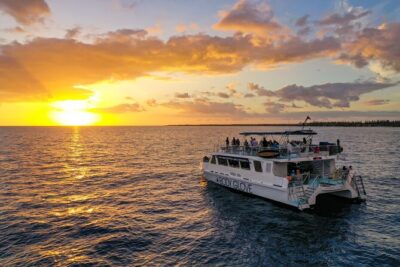
Big Island Historical Dinner Cruise to Kealakekua Bay
Read our review →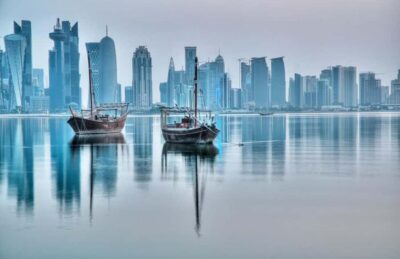
Doha: Cultural Dhow Harbor Cruise with Optional Tea & Dinner
Read our review →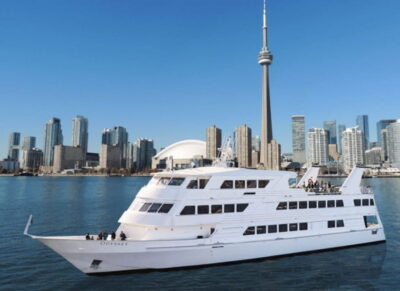
Toronto: Premium Harbor Cruise with Lunch, Brunch, or Dinner
Read our review →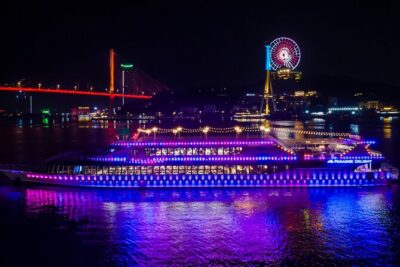
Buffet on Paradise Delight Dining Cruise Halong Bay Tour
Read our review →
Auckland Harbour Sailboat Cruise Including Three Course Dinner
Read our review →
Browse the lists this tour appears in