
REVIEW · BAY OF ISLANDS
Bay of Islands: 18,000ft Skydive
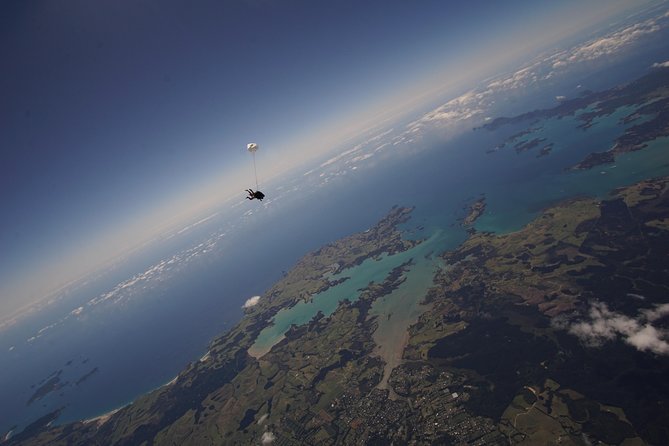
The most striking thing here is the height: at 18,000 feet, you get New Zealand’s highest skydive in the North Island and a broad view over the Bay of Islands’ 144 islands. On a clear day, the panorama can reach far north toward Cape Reinga, turning a short adventure into a memorable way to see Northland.
I like the complimentary collection from central Paihia and Kerikeri, and I like the instructors’ calm, friendly approach. Prashant is often praised for explaining each step and settling nerves, while Rhys, Maurice, Filip, and the wider team bring plenty of personality. The main drawback is weather and aviation delays, so your 1.5-hour activity can stretch to two to four hours.
Key points to know before you book
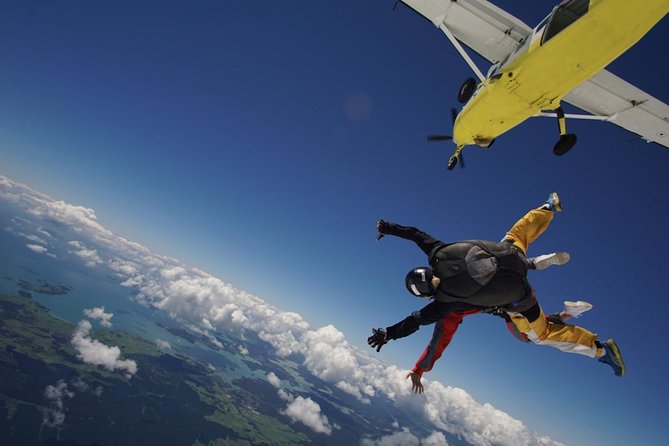
- 18,000-foot altitude: This is promoted as the highest tandem skydive in the North Island.
- Views over 144 islands: You may see Paihia, Russell, Urupukapuka Island, Cape Brett, and the wider Northland coast from above.
- Calm tandem instructors: Prashant, Rhys, Maurice, and Filip are among the instructors praised for clear guidance and friendly reassurance.
- Pickup from Paihia or Kerikeri: A complimentary collection service is offered from central areas, but hotel pickup and drop-off are not included.
- Allow extra time: The jump usually takes about 1.5 hours, but weather and aircraft requirements can make the visit last up to four hours.
- Strict preparation rules: You need closed-toe shoes, comfortable clothes, a printed voucher, and must stay under the 100-kilogram weight limit.
Why 18,000 feet makes this jump special
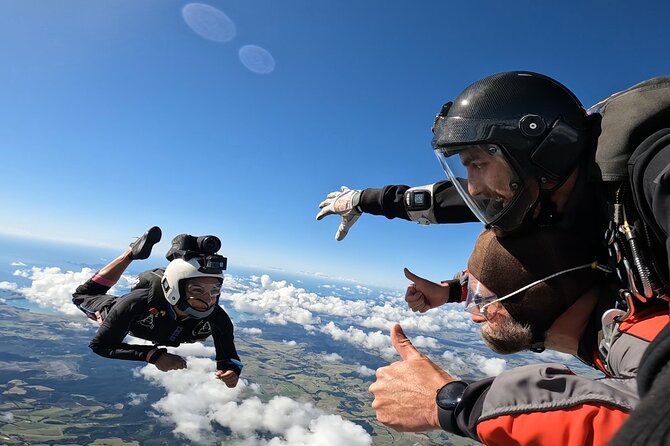
Most tandem skydives are sold on the thrill of the freefall. This one adds a strong sense of place. You are not simply dropping over an anonymous field. You are looking down on the Bay of Islands, a spread of small islands, coves, beaches, and clear water along Northland’s coast.
The jump begins at 18,000 feet, giving you more time in freefall than a lower-altitude option. The exact length of the freefall is not stated, so I would not book this expecting a precise number of seconds. The useful point is that the extra height gives the experience a bigger scale, both in the air and in the view.
That height also makes weather important. A cloudless day can reveal a huge amount of Northland, possibly reaching toward Cape Reinga. On a cloudy or unsettled day, your view may be more limited, and the operator may need to delay the aircraft or shift the jump time.
You should call 0800 GO JUMP one hour before your scheduled time to confirm that conditions are suitable. This is not a minor courtesy. Skydiving depends on safe wind, cloud, and aircraft conditions, so keep your day flexible.
More Island Hopping Cruises in New Zealand
- Bay of Islands Tall Ship Sailing on R. Tucker Thompson Including BBQ Lunch
★ 5.0 · 361 reviews - Bay of Islands Glow Worm Caves & Scenic Shore Excursion
★ 4.5 · 317 reviews - Bay of Islands: 12,000ft Skydive
★ 5.0 · 253 reviews
Getting to the drop zone in Kerikeri
The meeting point is 182 Wiroa Road, Kerikeri 0293. The activity finishes back there, so plan your day around returning to the same location.
If you are staying in central Paihia or Kerikeri, ask about the complimentary collection service. The operator specifically offers pickup from central areas in both towns, but this is not the same as hotel pickup and drop-off. If your accommodation is outside those central zones, call ahead rather than assuming a shuttle will reach you.
The voucher must be printed and presented at the drop zone. That is an old-fashioned rule, but it matters here. Do not rely only on a phone ticket unless the operator confirms that is acceptable.
The operation can accommodate a maximum of 24 people. That does not mean 24 people will be in your aircraft or jumping at the same time, but it gives you an idea of the possible group size at the facility. Jumpers take priority in the shuttle vans. Spectators can come along if there is room, but they may need to arrange their own transport if booked customers fill the vehicles.
What happens before you leave the ground
Your instructor will provide the training and safety equipment. You will also receive instructions on body position and what to do during the jump. The reviews repeatedly highlight the value of this human side of the experience.
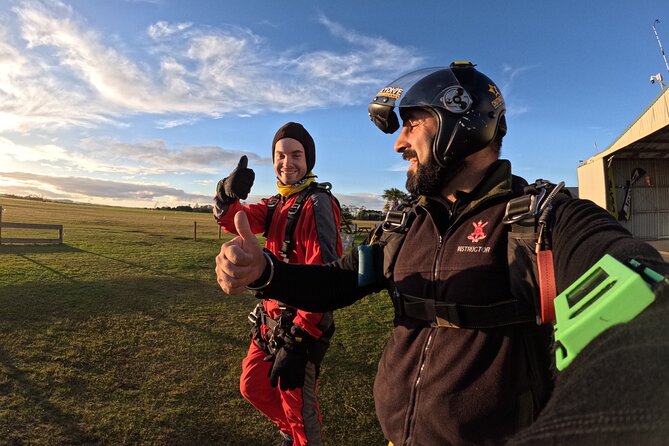
Prashant is praised for being professional, explaining each step, and helping first-time jumpers relax. Another account singles out Filip for combining calm authority with friendly conversation. Rhys is described as energetic and entertaining, while Maurice helped make a second jump memorable with a forward roll and a playful cloud walk.
Your instructor may be one of these people or another member of the team. You cannot choose a specific instructor from the information provided, so treat the names as examples of the team’s style rather than a guarantee.
That friendly approach matters because the hardest part for many people is the waiting. You may feel fine during the booking process, then become very aware of the open aircraft door. A good tandem instructor keeps the instructions simple and gives you something practical to focus on.
Wear comfortable clothing and closed-toe shoes. You do not need to bring special safety equipment, but you do need to meet the operator’s requirements. The maximum weight is 100 kilograms. If you think you may be close to that limit, contact the operator before booking so there are no surprises at the drop zone.
You should also seek professional medical advice if you have a condition that could affect your ability to skydive. Anyone under 18 needs signed consent from a parent or guardian. If you have scuba dived within the previous 24 hours, you cannot skydive because of the pressure change.
The aerial view of the Bay of Islands
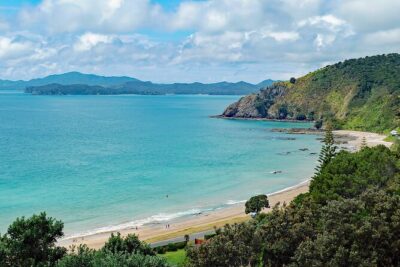
The Bay of Islands is made up of 144 islands, and this is the heart of the experience. From ground level, you usually understand the bay in pieces: one beach from a road, one island from a boat, one headland from a lookout. From the aircraft, you can see how the waterways and islands fit together.
Paihia is the main coastal base for many Bay of Islands visits. From above, you may see its shoreline and the waterways that lead into the archipelago. It is a useful point of reference, especially if you are staying there and want to recognize your holiday base from the air.
Across the bay, Russell offers a different view. This historic waterfront town is surrounded by water and wooded hills, and its position becomes clearer from altitude. You will not stop there, but it can form part of the wider view during the flight.
Urupukapuka Island, the largest island in the Bay of Islands, is another major feature. It is known for walking tracks, beaches, and clear water. Seeing it from the aircraft gives you a quick sense of its size and position, though an aerial pass is no substitute for spending time on its trails.
You may also see Cape Brett, the rugged peninsula that reaches into the ocean. Its cliffs and open coastal views provide a strong contrast to the sheltered islands closer to Paihia and Russell. Nearby, the famous Hole in the Rock is a natural archway in the sea. It is a small feature in a very large view, so do not expect to identify every point from the air, but the formation is part of the wider Cape Brett area.
More Island Hopping Cruises in the Bay of Islands:
- Full-Day Bay of Islands Tour by Vigilant Yacht Charters
★ 5.0 · 219 reviews - Phantom Sailing Bay of Islands
★ 5.0 · 177 reviews - Bay of Islands: Awesome Day Sailing Tour with Island Stop
★ 5.0 · 101 reviews - Bay of Islands Tall Ship Sundowner Sailing
★ 5.0 · 100 reviews
Historic places below you
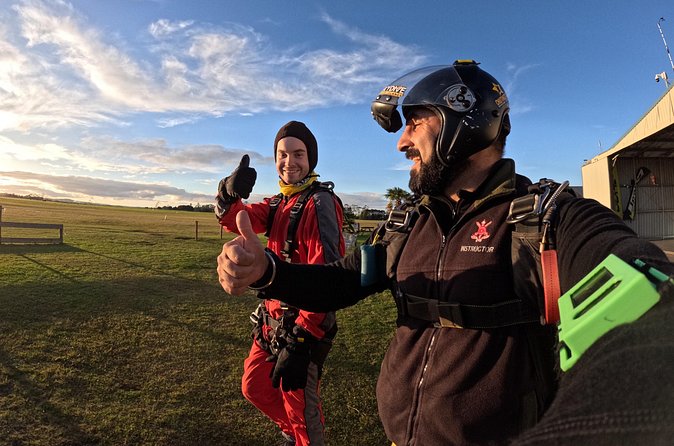
The jump also gives you a different angle on the places that define Northland’s past.
Waitangi, across the water from Paihia, is the birthplace of modern New Zealand. The grounds are historically important, and an aerial view shows their position beside the bay and surrounding coastline. The skydive cannot replace a visit to Waitangi, where you can spend time with the site’s history and cultural meaning, but it can help you understand the setting.
Inland, Kerikeri is known for New Zealand’s oldest stone buildings and its green surroundings. Since the jump begins and ends near Kerikeri, the town may feel less like a distant sightseeing stop and more like your practical base for the activity.
Farther north, Cape Reinga is New Zealand’s northernmost tip, where the Pacific Ocean and Tasman Sea meet. The tour information notes that on excellent days you can see right up toward Cape Reinga, but it is not directly visible on most jumps. Keep your expectations realistic: Cape Reinga is a possible distant reference, not a guaranteed feature directly below you.
Near Matauri Bay, the Rainbow Warrior memorial marks the 1985 bombing of the Greenpeace ship. It is another point of interest in the wider Northland region. From the sky, you may not be able to pick out the memorial itself, but the coastal area adds historical context to the flight.
The freefall and return to earth
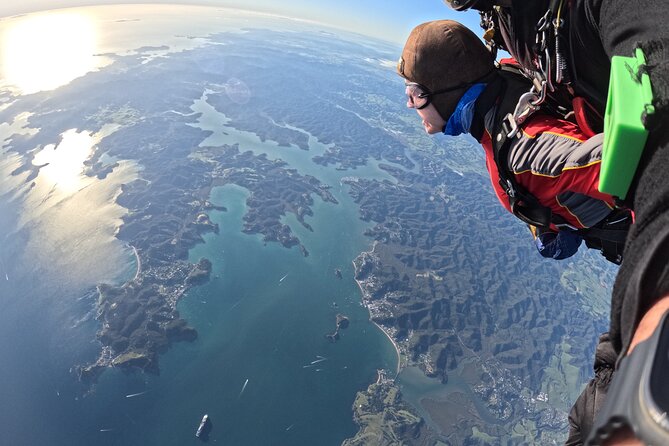
The freefall is the part most people imagine first, and at 18,000 feet it is the main rush. You leave the aircraft attached to your tandem instructor, follow the body-position instructions, and experience the sudden change from sitting in an aircraft to moving through open air.
The language used by past participants is consistent: the freefall feels intense, exciting, and far outside the normal travel routine. One person described the jump as the most exhilarating activity they had tried, while another called it a major bucket-list achievement. Those reactions make sense, but you should not confuse excitement with comfort. The first moments can feel loud, fast, and physically demanding.
After the freefall, the parachute opens and the pace changes. You have more time to look around and take in the bay. This is when the islands, beaches, and headlands become easier to appreciate. Your instructor manages the parachute and guides the return to the drop zone, so your job is to listen and enjoy the view.
The landing is part of the instruction too. Wear proper shoes, pay attention to the guidance, and expect to finish back at the Kerikeri meeting point.
Photos and videos are available to purchase, but they are not included in the $297 price. If you want a record of the jump, factor that extra cost into your budget. The supplied information does not give the media package price, so ask before you commit.
Is $297 good value?
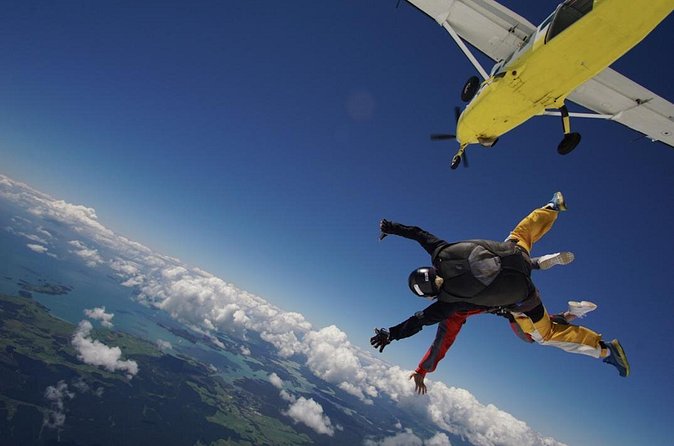
At $297, this is not a casual add-on like a short lookout visit. It is a specialist aviation experience with safety equipment, tandem instruction, aircraft time, and a high-altitude jump. For someone who wants to skydive in New Zealand and also cares about the setting, the Bay of Islands location gives the price a clear purpose.
The value is strongest if you have limited time in Northland. The tour description presents the jump as a fast way to see a large section of the bay, and that is fair. In a short activity, you can take in Paihia, Russell, the islands, Cape Brett, and parts of the wider coast from one extraordinary viewpoint.
The value is weaker if your priority is a relaxed sightseeing tour. You are paying for adrenaline first and scenery second. Weather can affect what you see, the schedule can shift, and photos cost extra. If you want detailed views of Waitangi, Urupukapuka, or Cape Reinga, spend time on the ground as well.
The $297 price also does not include hotel pickup and drop-off. Central Paihia and Kerikeri collection is complimentary, which helps, but you still need to confirm the exact pickup point and leave plenty of time.
Timing, weather, and cancellation rules
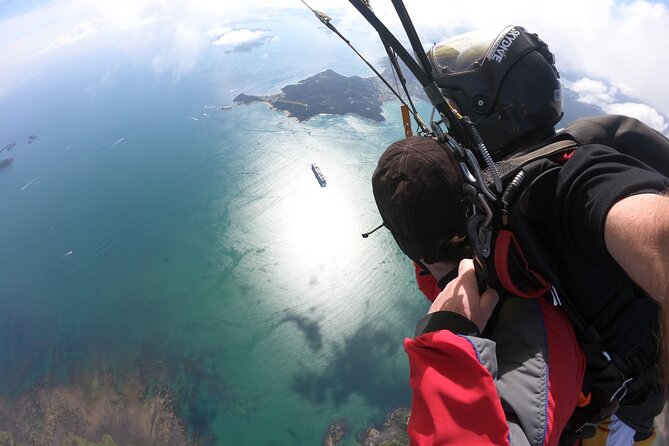
The actual skydive often takes about 1.5 hours, but you should allow two to four hours. The extra time covers changing weather and unexpected aviation requirements. Do not schedule a tight connection, a meal reservation, or another timed activity immediately afterward.
Open-dated vouchers need to be booked seven days ahead of the requested jump date. If you need to cancel for a full refund, do so at least 24 hours before the start time. Changes or cancellations made inside that period are not accepted for a refund.
The operator asks for 48 hours’ notice when you are rescheduling or canceling. That is the more sensible target if your plans change. Calling one hour before the jump to confirm conditions remains essential, even if the forecast looked good earlier in the day.
Who should book this experience?
I would recommend it to a first-time jumper who wants strong support from a tandem instructor and a memorable setting. It also suits repeat jumpers. Maurice’s account of a second jump, including a forward roll and cloud walk, shows that the experience can still feel playful after the first time.
It is a good fit for active visitors with moderate physical fitness. You need to be comfortable following instructions and meeting the stated health and weight requirements. Anyone with a relevant medical condition should seek professional advice first.
I would be more cautious about recommending it to someone with a rigid itinerary, a strong fear of heights, or no patience for weather delays. You may spend time waiting, and the view depends on conditions. If your main aim is to see Cape Reinga itself, book a dedicated northern excursion instead.
My verdict: book it if the jump is the point
Book this skydive if you want a serious thrill with one of Northland’s best aerial settings. The 18,000-foot altitude, the 144-island view, and the calm support from instructors such as Prashant, Filip, Rhys, and Maurice make it more than a generic jump over a field.
Go in with realistic expectations. Cape Reinga is not guaranteed, photos cost extra, pickup is limited to central Paihia and Kerikeri, and the day may run long. If you can keep your schedule open and meet the safety rules, this is a memorable way to see the Bay of Islands quickly, loudly, and from a completely different angle.
FAQ
Where does the Bay of Islands skydive start?
The meeting point is 182 Wiroa Road, Kerikeri 0293, New Zealand. The activity finishes back at the same meeting point.
Is pickup available?
Complimentary collection is offered from central Paihia and Kerikeri. Hotel pickup and drop-off are not included, so you should contact the operator to confirm the correct collection details.
How high is the jump?
The tandem skydive takes place from 18,000 feet, described as the highest high-altitude skydive in New Zealand’s North Island.
How long does the experience take?
The skydive typically takes about 1.5 hours, but you should allow two to four hours because weather and aviation requirements can cause delays.
What should I wear?
Wear comfortable clothing and closed-toe shoes. Training and safety equipment are provided.
Is there a weight limit?
Yes. The strict weight limit is 100 kilograms. If you think you may be close to that limit, contact the operator before your jump.
Can I cancel for a refund?
You can receive a full refund if you cancel at least 24 hours before the experience start time. Changes or cancellations made less than 24 hours in advance are not accepted for a refund.
Just added around the Bay of Islands
- Private Yacht Charter and Island Excursions in the Bay of Islands★ 5.0 · 3 reviews
- Kawiti Family Glowworm Caves Guided Tour in Bay of Islands★ 4.0 · 12 reviews
- Bay of Islands Shore Excursion: Puketi Rainforest Guided Walk★ 5.0 · 27 reviews
- Guided Puketi Kauri Forest Tour in Bay of Islands★ 3.5 · 3 reviews
- Bay of Islands Tall Ship Sundowner Sailing★ 5.0 · 100 reviews
- Bay of Islands Scenic Tour★ 5.0 · 50 reviews
- Bay of Islands: 9000ft Skydive★ 4.5 · 12 reviews
- 1 Hour Scenic Bay of Islands Tour★ 5.0 · 3 reviews
Bay of Islands Cruises, compared.

Bay of Islands Tall Ship Sailing on R. Tucker Thompson Including BBQ Lunch
Read our review →
Bay of Islands Glow Worm Caves & Scenic Shore Excursion
Read our review →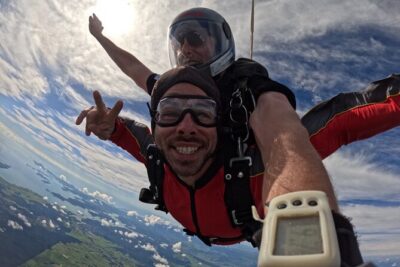

Full-Day Bay of Islands Tour by Vigilant Yacht Charters
Read our review →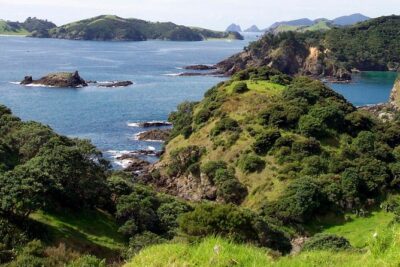

Bay of Islands: Awesome Day Sailing Tour with Island Stop
Read our review →
Browse the lists this tour appears in